Death, the afterlife, and spiritual readiness
Anne of the IslandDeath, the afterlife, and spiritual readiness become urgent rather than abstract when Ruby Gillis tells Anne Shirley that she knows she is dying and is afraid to leave the life she has known. Their moonlit conversation makes the question of readiness practical: belief in heaven does not by itself make death welcome, and the way a person lives may shape whether what follows seems familiar or alien. For Anne, hearing Ruby changes the meaning of ordinary life and gives spiritual preparation a present-tense purpose.
Ruby’s Fear of Death
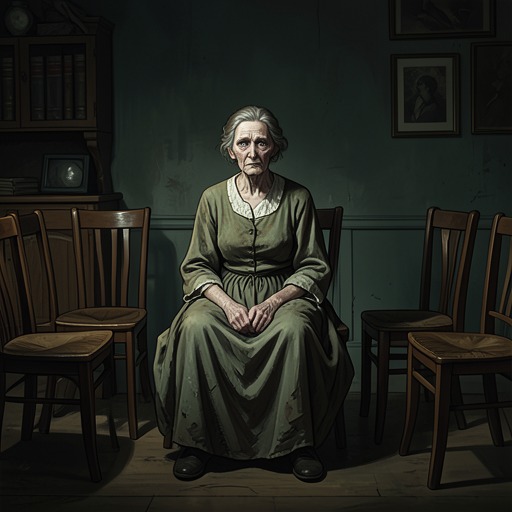
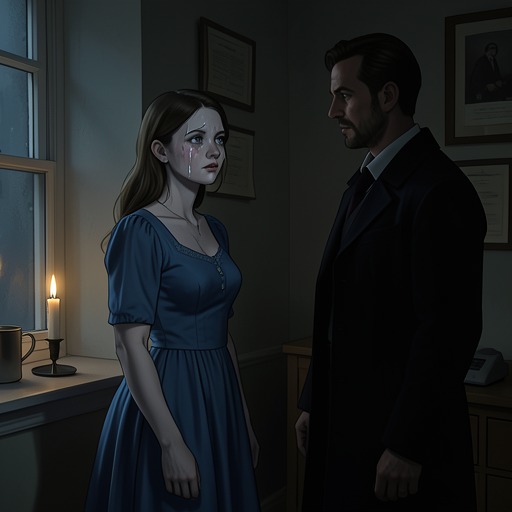
The conversation begins beside a graveyard visible from the Gillis homestead. Ruby, usually associated with parties, dresses, and suitors, is quiet, pale, and wrapped in a white shawl; her untouched work lies beside her in the hammock. The change in her manner sets the scene apart from her former gaiety. Against the moonlit gravestones, she says that she will soon lie among them while Anne, Diana Barry, and the others continue living. Anne is taken aback, but she does not deny what Ruby already knows.
Ruby explains that she has known all summer that she is dying, though she had resisted admitting it. Her fear is not simply disbelief in an afterlife: she says that she is not afraid she will fail to reach heaven, and identifies herself as a church member. What frightens her is the prospect of a life unlike the one she understands. She insists that she wants to keep living here, is young, has not had her life, and must leave everything she cares about. The scene gives her terror a distinct shape: faith may affirm a destination, but it cannot erase attachment to the familiar world or the grief of leaving it.
Two Understandings of the Afterlife
Anne answers tentatively, offering a conception of heaven that differs from the distant, wholly unfamiliar place Ruby fears. She suggests that people may go on living much as they do on earth, remaining themselves, but with hindrances and perplexities removed. In that clearer existence, she believes, it will be easier to be good and to follow what is highest. Her response is a hope, not a claim of certainty; Ruby points out that Anne cannot know whether this imagination is true and remains convinced that heaven cannot simply be the same as earthly life.
The difference between them is also a difference in what each has made central. The narration recognizes the truth in Ruby’s grief: she is leaving the things she loves, and her treasures have been earthly ones. Anne cannot console her by pretending otherwise. Yet the scene places that attachment beside a larger possibility: earthly life can form a connection between the present and the life to come, rather than leaving death as a passage into something wholly alien. In this account, spiritual readiness does not require denying earthly love. It means allowing one’s ideals and aspirations to reach beyond the passing things that have occupied one’s life.
Anne’s Changed Purpose
An earlier anecdote helps clarify the change in Anne’s understanding. She remembers a funny story Philippa Gordon had told about an old man who expressed a similar reluctance toward the world to come. Anne and Priscilla Grant had laughed at it then. Hearing Ruby speak, Anne can no longer treat that sentiment as comic: coming from a dying friend, it seems sad and true. The return of the story changes its force, showing how an idea that once seemed amusing becomes grave when set beside an actual person facing death.
After Ruby tells Anne that the conversation has already helped and that death seems less dreadful, Anne walks home slowly in the moonlight. The evening has altered her sense of life. She does not imagine that the surface of daily existence will change; instead, she understands that its purpose must deepen. She resolves that her own end should not find her, as Ruby’s seems to, shrinking from what comes next because her accustomed thoughts, ideals, and aspirations have left her unprepared. The narrative states the principle directly: “the life of heaven must be begun here on earth.” Readiness is thus presented as a way of living now—seeking and following the highest—rather than as reassurance postponed until death.
Death, Memory, and the Meaning of Readiness
The farewell proves final. Anne never sees Ruby alive again. The next night, while the A.V.I.S. holds a farewell party for Jane Andrews before her departure for the West, a death occurs elsewhere in Avonlea; the following morning, news spreads that Ruby died peacefully in her sleep. The contrast between the party’s dancing, laughter, and conversation and the summons of a soul that cannot be evaded makes ordinary communal life continue alongside an irreversible loss. Ruby’s calm death does not undo the fear she voiced, but her smile suggests that the end was gentler than the phantom she had dreaded.
At the funeral, Anne has placed delicate flowers around Ruby, and her beauty is remembered in a form different from the earthly beauty for which she had been known. Anne looks through tears and thinks she sees the face God had meant Ruby to have; she remembers her that way. The image does not establish what Ruby experiences after death. Instead, it gives the living a final way to understand and remember her, while the earlier conversation preserves the complexity of her fear. Through Ruby’s death and Anne’s changed resolve, the subject joins mortality to the quality of earthly attention: death exposes what a life has been centered on, while grief can deepen the survivor’s sense of what remains to be pursued.